
25 Cheap Horror Games on Steam — Scary Games That Won't Break the Bank
 Anastasiia Sokolova
Cheap horror games are one of the richest corners of Steam: these days a genuinely frightening game can be built by a tiny team on almost no budget. That flood has a downside — for every hidden gem there's a lazy cash-grab waiting to waste your money.
To take the guesswork out of it, here's a rundown of the best budget horror games that scare far harder than their price suggests: co-op frights for a squad of friends, story-driven indies with real writing behind them, retro and pixel-art nightmares, and, of course, fresh releases from 2025-2026. Pricey classics that only went cheap with age didn't make the cut — the picks below were affordable from day one, and they drop even lower during Steam sales. What follows will terrify you with just about everything except the checkout screen.
Cheap co-op horror games
You'd think real fear only strikes when you're alone in the dark. In practice, co-op horror holds its tension just fine — and being scared alongside friends is half the fun. This section rounds up the best budget co-op horror on Steam: ghost hunts, scavenging runs on cursed planets, survival against cannibals. Most cost pocket change, and a single session can easily run till sunrise.
Phasmophobia
Phasmophobia is the runaway favourite among cheap co-op scares. There's a solo mode, but the whole point is a squad of up to four: you split roles and comb haunted locations together, gathering evidence that the ghost is real. There's no story to speak of, yet the variety is rare for a budget title — dozens of ghost types with distinct behaviour, a stack of maps, and a full toolkit of thermometers, night-vision cameras, spirit boxes and crucifixes. For a newcomer the trick is assembling a team willing to cooperate and actually learn the mechanics. However much a hunt descends into chaos and laughter, the game keeps reminding you what it is: linger in the dark too long and your sanity drops while the ghost turns aggressive. Add creaking doors, whispers and howling wind, and you have a first-rate fright in the vein of the Paranormal Activity films.
Lethal Company
The success of Lethal Company still looks like a fluke: a solo developer built it on next to nothing, the visuals lag behind even other indies — and the result is one of the finest co-op horrors in years. Four employees sign on with a sinister "corporation" and haul scrap off abandoned moons; the layouts regenerate every run, and missing your quota gets you fired straight into the vacuum of space. Runs demand a clear division of labour and a lot of saving each other's skins — one player can stay on the ship and use the terminal to flag loot and monsters or pop doors open. About those monsters: the crude look is deceptive, because they menace you as well as any blockbuster. Take the Jester — a harmless-looking music box with arms that, once the tune runs out, turns the level into a slaughterhouse. Several of the game's creatures even landed in the top scariest game characters and monsters. Dread and absurd comedy sit side by side here, so every run sticks in the memory.
Content Warning
Content Warning hands up to four players the roles of SpookTube creators who film anything horrifying for the views. By day the crew descends into the monster-infested Old World chasing the most viral clip they can get; by night they upload it and watch the views and cash tick up, then spend the earnings on better cameras, torches and medkits before heading back down. Here's the twist: other people's deaths sell best — the dumber and grislier the cameraman's demise, the more eyeballs it pulls — so every trip becomes a tug-of-war between greed and self-preservation. It was given away free at launch and became an instant hit. It also made the roundup of the best co-op games.
Devour
In Devour a team of up to four plays cultists tasked with banishing the demon Azazel, who has possessed one of their own. Maps are randomised, and the core job is finding and destroying a set number of ritual items to carry out the exorcism. The demon roams freely, knocking careless players off their feet and dragging them to hell. A pre-planned tactic won't save you: item spots, locked doors and enemy spawns are reshuffled every attempt. Rather than simply scaring you, the game induces panic — each totem you burn swells the enemy count and makes them nastier. Your only defence is a flashlight beam, which stalls the demon for a moment but can't kill it.
Dead by Daylight
Long before the world lost its mind over Lethal Company and Phasmophobia, it was Dead by Daylight that reigned as the flagship co-op scare. It's still going strong, with a steady stream of updates and crossovers pulling in guests from cult franchises — Michael Myers, Freddy Krueger, faces from Resident Evil (how Dead by Daylight plays in 2026). The core is asymmetric multiplayer: one player controls the killer while four others play survivors trying to repair generators and escape. Every killer has a signature power — traps, contagion, teleports — and going it alone against that is hopeless. Survivors heal one another and bait the killer using the environment, or cower in a locker while someone else gets chased. It also rewards cold calculation: reading the enemy, spending resources wisely, taking the right risk at the right moment.
R.E.P.O.
R.E.P.O. — short for Retrieve, Extract and Profit Operation — is built for a crew of three to six after some team wrangling, voice-chat banter and cheerful chaos. It clearly grew out of Lethal Company, but dials the fear down and the mayhem up, with everything hinging on its advanced physics. The squad drops into post-apocalyptic locations and lugs relics of human civilisation back to an extraction point. Every object, from a fragile vase to a back-breaking piano, has weight and momentum: you can drop it, smash it, hurl it at a teammate, spawning a heap of slapstick moments. Prowling monsters make sure nobody relaxes. Playing solo is scarier but far harder and duller — the whole appeal of R.E.P.O. lies in a crew's coordination, or the glorious lack of it.
The Forest
The Forest is the section's most ambitious entry: a full open-world survival game that still works as a genuine horror. The hero comes to after a plane crash on a peninsula ruled by a cannibal tribe, his son Timmy snatched away before his eyes. From there it's felling trees, building shelter, hunting, crafting weapons and descending into caves — the game's most harrowing place, where mutants nest. Co-op servers hold up to eight players, and survival turns into raising a proper fortress and mounting joint supply runs. Nighttime sieges by the tribe and claustrophobic cave dives keep even veterans on edge, which is why The Forest has long been one of Steam's best-loved survival co-ops (the success story of The Forest and Endnight Games).
Story-driven indie horror
The best indie horror almost always comes cheap. It doesn't need photoreal graphics or hundreds of animations, and it won't eat dozens of hours — its whole strength is a story that gets under your skin. Gathered here are budget narrative scares with sharp writing: bleak point-and-clicks, a card-game roguelike, survival in a cursed forest. Different in mechanics, alike in the grip of a strong plot.
Faith: The Unholy Trinity
Faith: The Unholy Trinity casts you as young Father John, who takes it upon himself to finish the exorcism that killed his mentor. Along the way John uncovers a satanic cult performing sacrifices in the mid-1980s; some lines and notes hint that certain events may be the fraying of his own mind rather than reality. The game blends nostalgia for top-down horror with a thoroughly oppressive mood. Its minimalist pixel art nods to the 8-bit era, while the cutscenes use rotoscoping — animation traced over footage of real actors. Dread builds slowly: early on it's just exploration and puzzles, but soon fast enemies and bosses appear, and since the hero dies in a single hit you end up memorising attack patterns like a soulslike. Still, what carries it is the story, its several endings and a queasy, discomforting sound design.
The Mortuary Assistant
The Mortuary Assistant drops you into the shoes of a mortuary trainee working a night shift gone wrong. The heroine, Rebecca, learns that a demon has burrowed into one of the bodies, and to see morning she has to identify the possessed corpse, perform a sealing ritual and burn it in the crematorium. The game is a master of enclosed-space dread and the sick anticipation of something lethal: whispers and sharp noises erupt out of nowhere, bodies vanish and reappear, and the quiet stretches unsettle more than any jump scare. The mortician's routine — draining arteries, stitching incisions, pumping out blood — is grim in its own right. Each exorcism runs about an hour; fail to find the right body in time and the demon wins, ending the run. This game also has one of the best jump scares.
Darkwood
Darkwood is a top-down survival horror set in an infected Polish forest cut off from the rest of the world. By day the hero roams the thickets, gathers supplies, trades with unnerving locals and makes moral choices that branch the story. By night there's only one option — barricade the hideout, board up the windows and listen to the rustling beyond the walls until dawn. It refuses jump scares on principle: the fear grows out of a cramped field of view, a suffocating soundscape and the nagging sense that the forest is watching you (why jump scares stopped being frightening and what works instead). Over the years the work of Polish studio Acid Wizard has rightfully become a genre classic.
Fran Bow
The hand-drawn adventure Fran Bow follows a ten-year-old girl who lands in a psychiatric hospital after her parents' brutal murder. The moment she takes her pills, an alternate reality of blood and monsters unfolds before her, and every puzzle hangs on flipping between the two worlds: an item out of reach in the "normal" one turns up in the nightmarish version. The tale of Fran and her black cat Mr. Midnight is a tender yet crushing fable about a child's psyche and a trauma that clings to the very end. The cartoonish, almost sweet art only sharpens the contrast with what's on screen, and fans still argue over how to read the ending.
Crow Country
The makers of Crow Country drew on classic Resident Evil and Silent Hill from the first PlayStation era. The heroine — special agent Mara Forest — arrives at an abandoned amusement park to unravel the disappearance of its founder. The park opens up gradually: new zones hide keys to locked doors, notes that fill in the plot, and puzzles rewarding attention and clever use of the surroundings. Sluggish monsters and dismal scenery set the horror tone; Mara carries a pistol, shotgun and even a flamethrower for "conversations" with them, but the enemies are slow and easy to sidestep or lure into traps, which softens the tension. The setting, though, is faultless — a decaying park of finely detailed rides rendered in PS1-style graphics, complete with grain and a VHS filter, nailing the sense of rot and unease.
Inscryption
Inscryption is a gloomy roguelike disguised as a card game. You sit in a dim cabin across from a creature whose eyes glow in the dark and play cards for your own life. A loss means death, yet between hands you're allowed to stand up and search the cabin — it hides puzzles that can rewrite the rules of the match itself. Saying more would spoil it: Inscryption breaks the fourth wall more than once and upends your whole idea of what you're playing — no wonder it made the roundup of games that destroy the fourth wall. On top of that, Daniel Mullins' creation took Game of the Year at the 2022 Game Developers Choice Awards.
Buckshot Roulette
Buckshot Roulette could pass for a digital board game, its rules are that spare. A solo developer reimagined classic Russian roulette, swapping the revolver for a 12-gauge pump-action shotgun. The room holds just two: you and the Dealer, who loads the gun each round with a mix of live and blank shells. Turns alternate — you can shoot yourself if you're sure the next shell is a blank, or the opponent if you're betting on a live one. Every turn is pure nerve and gamble: however carefully you count, there's always a chance the next shot is fatal. Live rounds pile up as the game goes on, and in the finale restoring health is off the table. A grimy underground-club backdrop and a droning soundtrack pile on the pressure.
Retro and pixel horror
Pixel graphics are no obstacle to fear, and the budget retro picks gathered here prove it. PS1-style low-poly models, 1-bit stylings and hand-drawn pixel art breed a peculiar dread: the imagination fills in whatever the screen withholds. A nice bonus — these scares run even on a distinctly weak PC, and nearly all of them cost next to nothing.
Mouthwashing
Mouthwashing has earned its place among the best psychological horror games. It's a short, cinematic first-person scare with low-poly, PS1-style visuals that lend it the right psychedelic edge. The story follows five crew members of a freight spaceship slowly losing their grip: no help is coming, supplies are running out, and the only cargo in the hold that can dull the hunger and pain is litres of mouthwash. Body horror, mutilation and psychologically heavy scenes come thick and fast. It frightens not with monsters or jump scares but with sheer hopelessness, the player skipping across a "before" and "after" timeline as isolation, paranoia and guilt strip the crew of everything human. Well worth knowing for anyone who values tight drama with no grind or bloat, close in spirit to Signalis and the films of David Lynch.
No, I'm not a Human
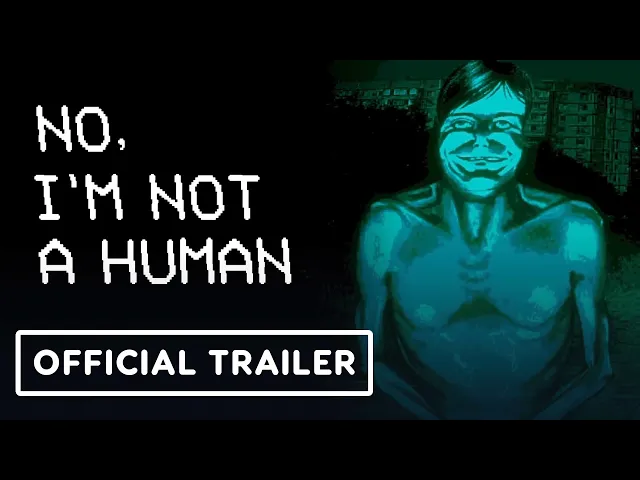
No, I'm not a Human will click with fans of psychological indie horror as much as with devotees of Papers, Please and That's Not My Neighbor. The core loop is checking documents, spotting inconsistencies and rooting out impostors. Outside it's the apocalypse, the sun scorching everything alive, and the hero is holed up at home. Each night survivors knock, begging to be let in for shelter, and you have to interrogate and inspect them closely so you don't admit a "visitor" — a monster wearing a human face (No, I'm not a Human review). The tension rides on suspense, paranoia and an uncanny-valley effect rather than cheap jump scares: no one can be trusted, and any caller might not be who they claim. Every mistake is final — let a person in and you save their life; let a "visitor" in and it butchers you and everyone inside. This game and dozens of other solid projects are in the roundup of the best horror games from Russian developers.
Detention
The atmospheric 2D horror Detention, from Taiwanese studio Red Candle Games, carries you into a school under 1960s martial law. Two students find themselves locked in the emptied building, where reality has bled into a spirit world drawn from Taiwanese and Chinese folklore. To survive you hide from ghosts, hold your breath and solve puzzles rooted in local ritual. Behind the supernatural sits a heavy historical drama about informers, censorship and broken lives — the rare case where a horror ends up frightening you with human deeds rather than monsters. The game was adapted into a feature film and a Netflix series, no small feat for a low-cost indie.
Sally Face
The episodic, brooding adventure Sally Face introduces a boy named Sal Fisher, who hides his disfigured face behind a prosthetic. After moving with his father into the Addison Apartments, Sal starts digging into local murders and is gradually pulled into a tale of cults, ghosts and otherworldly dimensions. The gameplay leans on exploration, dialogue and mini-games, while the hand-drawn style sets off its trademark black humour nicely. The story is split across five chapters, each cheap on its own, and players bond with the cast so hard that they've been picking apart Sally Face lore for years.
World of Horror
The 1-bit roguelike World of Horror takes its cues from the manga of Junji Ito and the myths of Howard Lovecraft. The Japanese seaside town of Shiokawa is slowly losing its mind: old gods are stirring, and an ordinary schooler — the player's stand-in — investigates a string of sinister incidents. Each case is a chain of random events, turn-based skirmishes and harsh choices where any decision can cost the hero their sanity. It all looks like a page torn from a battered manga and sketched in MS Paint — and that very minimalism makes its images stick. Randomised generation keeps it replayable: a single run reveals only a handful of the dozens of cases, foes and endings.
OMORI

OMORI is a psychological horror with turn-based combat and JRPG trimmings, kept in a minimalist style and laced with distinctly Japanese unease — even though developer OMOCAT is American. You guide a withdrawn shut-in boy named Sunny, who has an unseen alter ego, Omori. Sunny wanders a bright, surreal dream world unpacking repressed memories of an old tragedy, returning now and then to drab reality. Its greatest asset is a deep, emotionally heavy story, and the horror mood rests not on ghosts or maniacs but on the characters' guilt, grief and anxiety. The art deserves a special word: every character and location looks hand-drawn. Fans of Undertale, EarthBound and Yume Nikki will feel right at home.
New cheap horror (2025-2026)
Budget scares from 2025-2026 deserve a look too — every month Steam's library swells with dozens of them. Here are five of the most intriguing newcomers of the past two years: from a co-op nightmare by the makers of Little Nightmares to a lone descent into the earth aboard a Soviet drilling rig.
Reanimal
Reanimal is easy to mistake for an unofficial Little Nightmares sequel — and for good reason: it comes from Tarsier Studios, the team behind the original duology. As there, the story is told obliquely: a brother and sister pick their way across a flooded, monster-ridden island to rescue three friends and uncover its dark secrets. The game is built for co-op, though you can see it through solo. Play rests on spatial puzzles, stealth and clashes with monsters, but the real hook is the thick, depressive atmosphere, conjured from the eerie creature design rooted in childhood fears, sparse music, meticulous sound work and clever lighting. Like most stories about children, this one is anything but childish — emotionally heavy, off-putting scenes are plentiful (Reanimal review).
MOLE
In MOLE you become the navigator aboard a colossal underground drilling machine, built in the USSR to bore into the planet's depths. One morning the hero finds the rest of the crew gone without a trace, dead silence all around, and a strange signal rising from below. In spirit it sits close to Iron Lung and Still Wakes the Deep. The goal is to keep the drill from stalling and untangle what happened to the crew while fighting off creeping madness. MOLE unnerves through claustrophobia and isolation among hundreds of switches, buttons and mechanical guts. The routine of watching gauges and repairing wiring ought to be calming, yet, as any good horror should, the game keeps ratcheting up the tension with hallucinations and the voices of the dead.
Look Outside

The pixel horror Look Outside, with its survival and resource management, plays like a cross between David Cronenberg's body horror and the Korean series Sweet Home. A cataclysm has swept the world: anyone who looks out a window turns into a flesh-eating creature. A man named Sam has barricaded himself in his flat inside a huge apartment complex, hoping to hold out a couple of weeks until the anomaly passes. Survival is a mix of household routine — cooking, crafting, playing video games — and supply runs with hardcore turn-based fights. As in No, I'm not a Human, someone occasionally knocks at the door: through the peephole you decide whether to admit a survivor or turn away a disguised monster. It nails the paranoia of a confined space and should land with anyone who loves grim pixel art, uneasy ambient and body horror. Publishing duties fall to Devolver Digital.
YAPYAP
YAPYAP is a co-op "magic horror" for six, casting players as a wizard's lowly minions. The task is to slip into the towers of rival mages and wreak havoc — the vandalism quota won't fill itself. Your kit is a grab-bag of spells; against you stand the magical beasts guarding the towers. In spirit it's a direct heir to Lethal Company and R.E.P.O.: chaos, shrieks over voice chat and ridiculous deaths all included. It launched in February 2026 and quickly built a devoted following — best played as a group, since flying solo drains all the fun.
MIMESIS
The headline gimmick of co-op horror MIMESIS is doppelgangers. Once a cursed rain sets in over the location, mimics appear, copying your teammates down to the last detail. Telling a friend from the thing impersonating them is the kind of problem that stops you trusting even a familiar voice in your headset. The idea clearly takes after the film The Thing, and in co-op it works brilliantly: every match turns into a paranoia contest. The project launched in early access and has already gathered a tight, loyal crowd happy to talk up the concept.
Frequently asked questions (FAQ)
What are the scariest cheap horror games?
It's down to taste, but the scariest budget picks are safely Phasmophobia, The Mortuary Assistant, Lethal Company and Dead by Daylight. A few worthy titles that missed the main list also deserve a mention: Visage, Iron Lung and Madison — all cheap, all seriously frightening.
What are the best cheap co-op horror games to play with friends?
There's plenty to choose from. First the outright hits of recent years: Lethal Company, Phasmophobia and R.E.P.O. Add the comedic Content Warning and the liminal-space chiller Escape the Backrooms, and you've got the pick of today's affordable co-op horror.
Which cheap horror games run well on a low-end PC?
Retro and pixel scares ask little of your hardware and start up on just about any aging PC. Look at World of Horror, Buckshot Roulette, Faith: The Unholy Trinity, Fran Bow, Darkwood and Detention — tiny installs that deliver far more atmosphere and fright than you'd expect.
What cheap horror games should I grab in a Steam sale?
A Steam sale is the best moment to snap up horror on the cheap. Regulars like Mouthwashing, Lethal Company, The Mortuary Assistant and Darkwood go lower still, alongside the fan-favourite Outlast. Bigger names such as SOMA or Amnesia: The Bunker often turn up discounted too.
Got your own contender for the scariest cheap horror out there? Drop it in the comments — the floor's open.
Wieczór w domu, tani horror i kilku znajomych — co odpalacie?
What else to play
Good horror on a tight budget is honestly everywhere right now — every pick above is a safe buy, no regrets. Cheap scares also turn up in Steam sales at tempting discounts on the regular. If you want a wider net, dive into the big best horror games roundup — it holds recognised hits like Resident Evil and Dead Space plus a few more fine budget indies. To close, here are four games that, for various reasons, didn't make the main list. Play the good stuff, and don't open the door to strangers.
Five Nights at Freddy's
Five Nights at Freddy's is, you could say, the ABCs of cheap indie horror. Playing a night guard, you spend the whole shift fending off animatronic robots that come to life in a pizzeria.
Fears to Fathom — Ironbark Lookout
Fears to Fathom — Ironbark Lookout is the fourth episode of the Fears to Fathom indie-horror series, tasking you with unravelling strange goings-on around a forest fire lookout.
KLETKA
KLETKA is a Russian co-op horror about descending underground in a decrepit elevator. A crew of up to four keeps the cabin powered, patches breakdowns and fights off the things lurking on its endless floors — the deeper you go, the scarier and stranger it gets.
Pacify
Pacify is a co-op scare about driving evil out of a haunted house. Up to four players hunt for a way to "pacify" a possessed girl who stalks them through the dark corridors — cheap, frightening and hugely replayable.
Najlepsze gry horror na PC i konsole
- 70 najlepszych horrorów wszech czasów (2026)
- Najlepsze kooperacyjne horrory — najstraszniejsze gry do wspólnej zabawy
- Strzelanki z zombie: Najlepsze gry na PC, PS4, PS5, Xbox i Switch
- Główne gry Resident Evil uporządkowane od najgorszej do najlepszej
- Główne odsłony Silent Hill — od najgorszej do najlepszej
- TOP 15 psychologicznych horrorów, które doprowadzą cię do obłędu
- 15 najstraszniejszych postaci i potworów z gier (2026)
- 21 Gier Podobnych do MiSide: Gry Horrory z Uroczych Dziewczynami i Ukrytymi Znaczeniami
- 37 Najlepszych Krótkich Gier Horrorowych na PC: Straszne Gry, Które Możesz Skończyć w Jedno Popołudnie
- TOP-5 najstraszniejszych skoków w grach
- Gry podobne do Outlast: najlepsze horrory, w których się ukrywasz, zamiast walczyć
- 63 najlepsze mobilne horrory — najstraszniejsze propozycje na Androida i iOS
- Gry podobne do Five Nights at Freddy’s: najlepsze horrory z animatronikami i maskotkami
- 25 Cheap Horror Games on Steam — Scary Games That Won't Break the Bank