

58 Best Train and Metro Games on PC: Train Simulators, Tycoons and Horror Games
 Anastasiia Sokolova
A railway can be a system to operate, a business to build or the setting for a mystery. This list brings together 58 train and metro games on PC across nine sections, covering realistic cab simulators, transport management, track-laying puzzles, survival games and story-led adventures. The differences matter: mastering a locomotive calls for a different kind of attention from planning a network or investigating a murder aboard an express.
For an introduction to the different genres, ten starting points are Train Sim World 5, Derail Valley, SimRail, Railway Empire 2, Transport Fever 2, OpenTTD, Metro Exodus, Mini Metro, Choo-Choo Charles and Unrailed!.
This list covers full PC games. Mobile idle clickers, browser games and Roblox maps are outside its scope.
Train driving & cab simulators
Train-driving simulators focus on the work inside the cab: applying power, managing the brakes, reading signals and keeping to a timetable. Microsoft Train Simulator helped establish this as a PC hobby in 2001, and the genre now ranges from accessible introductions to detailed simulations that take time to learn. The games below place locomotive operation at the centre of the experience.
Train Sim World 5
Licensed locomotives and real routes provide a straightforward introduction to driving from the cab. Dovetail's Train Sim World 5, released in 2024, continues a series that began in 2017 and focuses on the details of running a service: applying power smoothly, adjusting the brakes, reading signals and stopping with the doors aligned to the platform markers. A precise stop takes practice, particularly after a long journey in a heavy train. Tutorials introduce the main systems before moving on to timetabled passenger services, freight runs and scenarios. Annual releases expand the selection of routes and rolling stock, from commuter services to heavy mainline diesel and electric locomotives. The accessible presentation makes it a useful starting point, while the controls leave room to improve well beyond the first successful run. Its appeal lies in making routine railway work understandable without stripping away the details that give each locomotive its character.
SimRail
Other players help determine how each journey unfolds. SimRail reached version 1.0 in 2024 after entering Early Access the previous year, recreating a Polish rail network where drivers and dispatchers work on shared servers. Some players operate the trains; others manage signalling desks, set routes and hold services until the line ahead is clear. A delay can affect several participants, so cooperation matters beyond the controls of a single locomotive. Solo services use AI dispatchers, but multiplayer is the main attraction. Polish rolling stock, real timetables and block signalling support the sense of a wider railway in operation. Compared with a conventional solo simulator, the distinction is the need to account for other people's decisions as well as the route itself.
Derail Valley
Preparing a train is as important as driving it. Altfuture's Derail Valley, in Early Access since 2019, supports a conventional monitor and VR, with the latter giving its manual controls a more physical presence. Starting a diesel involves switches, engine preparation and attention to the machinery. Coupling wagons means aligning them, attaching the coupling and connecting the brake pipe; neglecting the braking system has consequences once the train is moving. Early jobs involve shunting and freight deliveries between industries, with the earnings funding larger and more demanding locomotives. Speed, gradients and the weight of the load all matter, and a derailment can damage both the cargo and the budget. The open valley provides routes to learn rather than simply follow. The satisfaction comes from understanding why a journey went well, and from putting that knowledge to use with a heavier train on the next assignment.
Train Simulator Classic
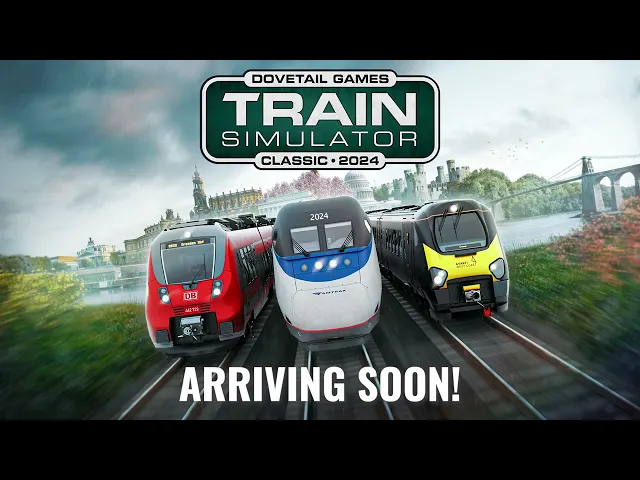
A large catalogue of locomotives and routes remains the main reason to explore this long-running simulator. Dovetail's Train Simulator Classic traces its history to RailWorks in 2009, with a free-to-play base available since 2023. More than a decade of additions has produced a broad selection of British, European and American lines, covering steam, diesel and electric traction on mainlines and branch lines. The graphics show their age, but the choice of equipment and locations is substantial. Driving follows the familiar pattern of completing services, making scheduled stops and keeping to time. It is particularly useful when the priority is a specific locomotive, period or route rather than the presentation of a newer simulator.
Trainz Railroad Simulator
Building a railway is as much a part of this series as driving on it. N3V Games' Trainz has been running since 2001, with releases including TRS19, TRS22 and the subscription-based Trainz Plus. The driving side covers steam, diesel and electric services across large layouts. The construction tools allow players to shape terrain, lay track, place stations and populate entire regions. Two decades of community contributions have added a substantial library of locomotives, scenery and complete routes to explore or modify. That combination gives the series a particular appeal: a layout can be a creative project, a place to operate trains, or both. The editor and the community surrounding it are central to its longevity.
Diesel Railcar Simulator
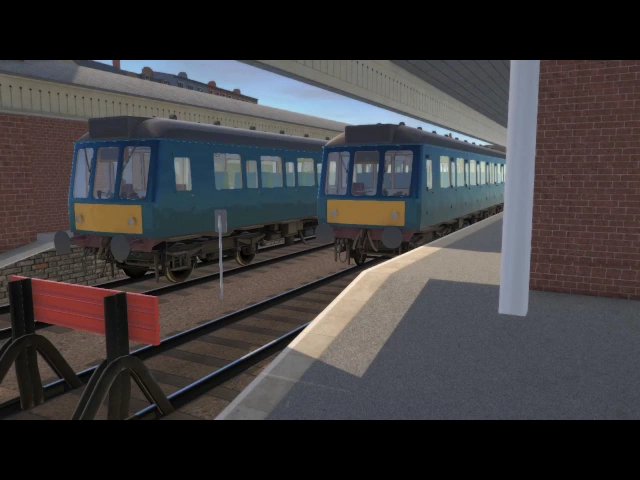
British diesel multiple units are the focus of Lapioware's specialist simulator. In Early Access since 2018, Diesel Railcar Simulator models the regional trains known as DMUs, paying particular attention to signalling, timetables and driving physics. A late brake application or a misread signal has a noticeable effect on the run, so learning the equipment matters. The presentation is modest, with the emphasis placed on the behaviour of the train and the procedures behind a successful service. It is a focused option for players interested in this particular type of rolling stock and willing to spend time understanding it.
Railroader
Operating a small railway adds business decisions to the usual cab controls. Giraffe Lab's Railroader, which entered Early Access in 2023, is set on an American short line during the transition from steam to diesel. Players drive from the cab, couple cars and carry out yard work while also scheduling services, moving customers' freight and monitoring the company's finances. The relatively small setting makes it easier to see how each siding and industry contributes to the wider operation. A successful journey matters because it helps keep the railway solvent. The combination of hands-on driving and company management gives routine tasks a clear purpose beyond completing an individual service.
TRAIN CREW
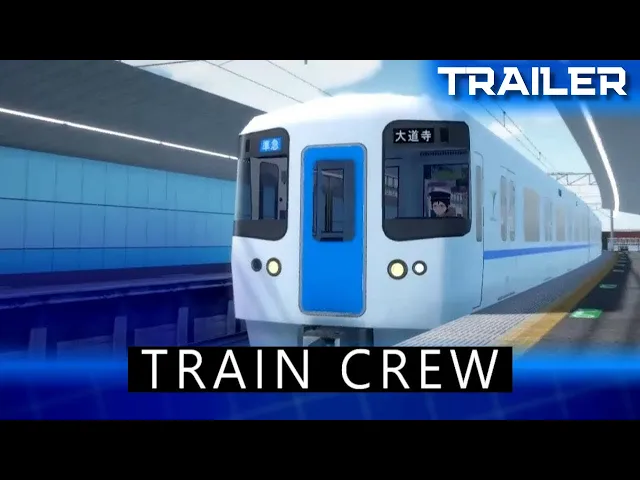
Accurate stops and smooth departures define the commuter services on the fictional Tatehama Electric Railway. TRAIN CREW has been in Early Access since 2021 and follows Japanese railway practice, asking players to control an electric multiple unit, observe signals and keep to the timetable. The challenge is to bring the train to the correct marker consistently, rather than simply cover the route quickly. Its measured pace leaves room to learn those details through repetition. A well-executed service offers a quieter kind of satisfaction, built around small improvements in timing and control.
Run8 Train Simulator
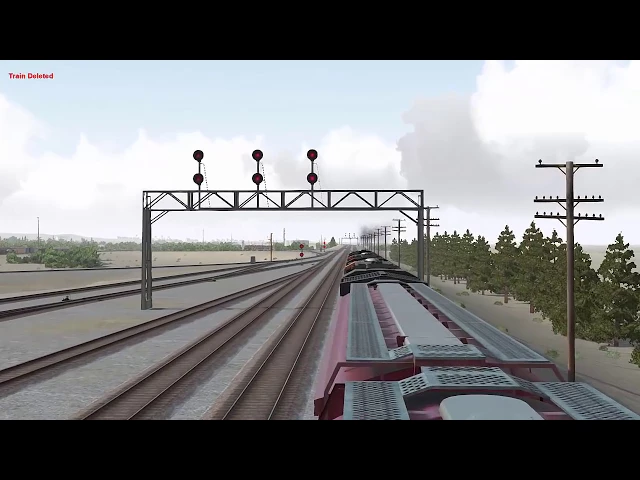
Heavy American freight and coordinated dispatching are the priorities here. Run8 Train Simulator's third version was released in 2022 and is sold directly rather than through Steam. Its recreated US subdivisions support ongoing operations on 24/7 multiplayer servers, where drivers move freight and dispatchers manage the routes around them. Detailed procedures and limited guidance make the learning curve demanding. In return, the shared network gives each journey a place within a larger operation. It is best approached as a railway to learn and participate in over time, particularly for players interested in American freight practices.
ZDSimulator
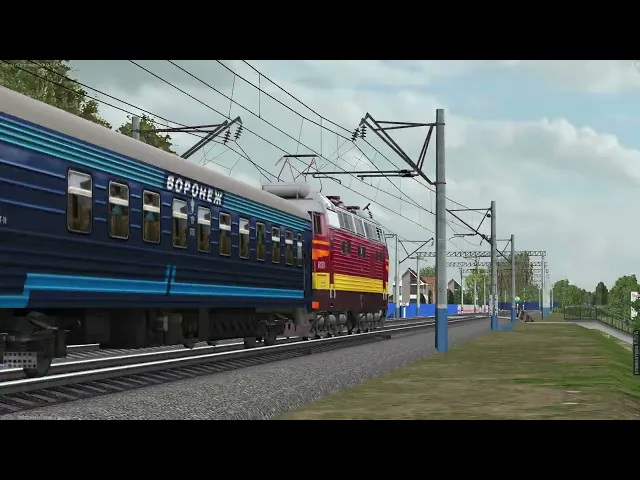
Driver-training origins shape the approach to locomotive control. ZDSimulator spent years in use on CIS railways before reaching Steam in 2025, bringing its focus on former Soviet and Russian equipment to a wider audience. Traction, braking and air pressure require careful management, while signalling and the long stopping distances of heavy trains demand planning. Its graphics are comparatively basic, but the emphasis is on reproducing the behaviour of the machinery. For players interested in these locomotives, that specificity is the main reason to learn its systems. It is also included among the best Russian games loved around the world.
Trans-Siberian Railway Simulator
Long-distance driving is combined with maintenance and survival on the Trans-Siberian route. In Trans-Siberian Railway Simulator, in Early Access since 2024, players operate a VL10 electric locomotive, raise its pantograph, monitor its electrical systems and deal with faults away from the depot. The stretches of Siberian wilderness make preparation important: keeping the locomotive running is only one part of reaching the next stop. Survival systems add responsibilities between periods in the cab, and breakdowns interrupt the rhythm of the journey. The combination gives the route a different emphasis from a conventional driving simulator, with distance measured as much in the problems overcome as in the track covered.
RUNNING TRAIN (走ル列車!)
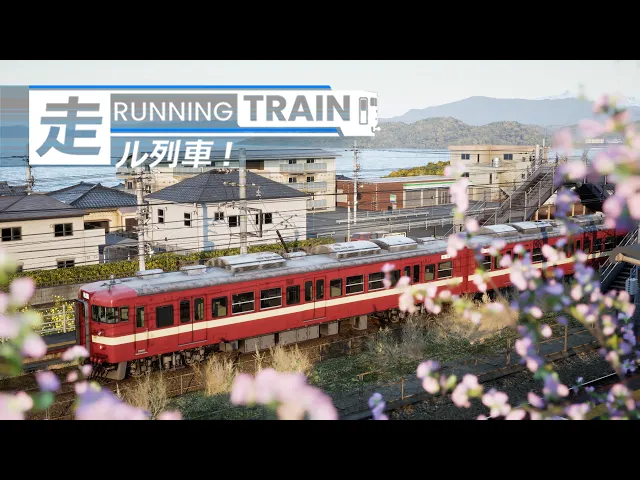
A detailed Japanese route provides the setting for commuter and express services run by fictional operators. RUNNING TRAIN (走ル列車!), created by solo developer Rizu under the Novatetsu name, entered Early Access in 2026 and uses Unreal Engine 5. Its hand-built line extends for nearly 40 kilometres, with dozens of scheduled runs, changing weather and shifting seasons. Driving centres on smooth acceleration, accurate stops and door operation. The photorealistic presentation also gives players a reason to explore outside the demands of the timetable: free-drive and photo modes are available, and automatic driving can take over the controls. The visual detail has already attracted attention among fans of Japanese commuter rail, complementing the emphasis on careful operation.
Subway & metro simulators
Frequent stops and short intervals between stations give metro driving a rhythm of its own. These simulators focus on signals, accurate braking, door operation and passenger boarding. The selection ranges from accessible commercial games to detailed community projects. The Metro shooter series, which uses the underground as a setting, has its own section below.
SubwaySim 2
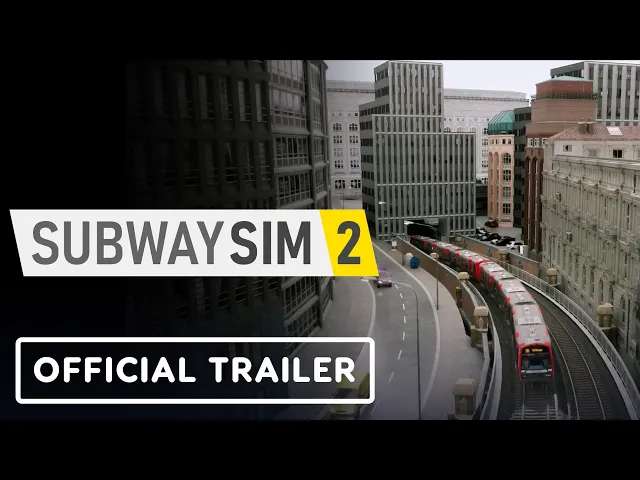
Frequent stops make timing and consistency central to a metro driver's shift. SubwaySim 2 recreates lines in Hamburg and Berlin, with first-person cab controls for acceleration, braking, doors and signalling. Each departure requires attention to the timetable and to the passengers still boarding. A late arrival can affect the rest of the service, while abrupt driving makes the journey less comfortable. Released in 2025, the simulator rewards familiarity with each line and the discipline of repeating the same procedures accurately. The two networks provide different routes to learn, giving players more to master after the basic controls become familiar. Its appeal is the way these small responsibilities combine into a convincing working routine.
Hmmsim Metro
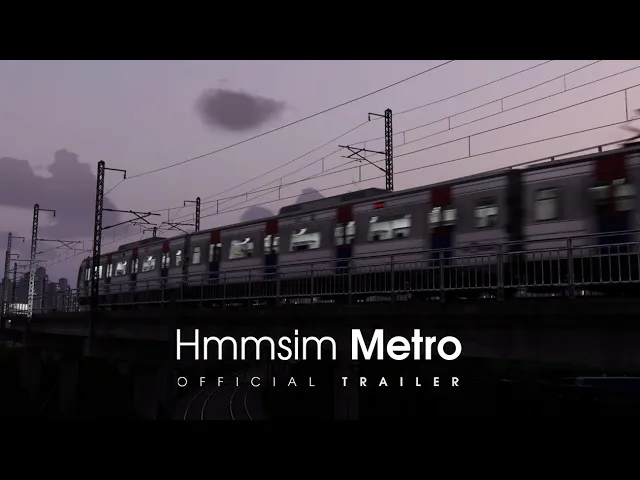
A relatively accessible set of controls makes it easier to begin learning metro operations. Hmmsim Metro brought the established mobile series to PC in 2021, combining a clear interface with believable acceleration and braking. Newcomers can start a service without first studying a large panel of switches, then gradually refine their handling of the train. Real lines provide recognisable routes, and careful braking still gives experienced players something to practise. The balance is useful for an introduction to the genre: the initial steps are manageable, while accurate driving remains a skill to develop.
Back in Service: a Metro Driver
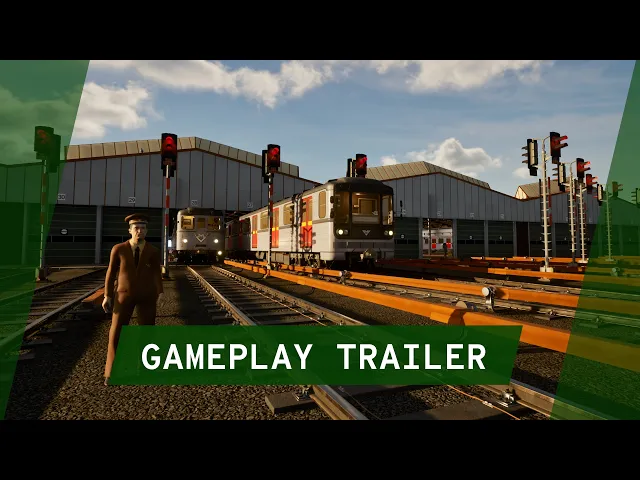
Historic Ečs and Soviet-built 81-71 trains provide a way to explore Prague's underground. Back in Service: a Metro Driver, the debut of Czech solo developer Dominik Vojta, entered Early Access in 2025. Players carry passengers along a metro line, follow the timetable and visit service tunnels. The structure also allows a less formal approach: the network can be explored freely, including the Hostivař depot, with small tasks available along the way. The unhurried pace and recognisable details of an Eastern European metro give the project much of its character. It offers space to become familiar with the setting alongside the usual driving duties.
openBVE
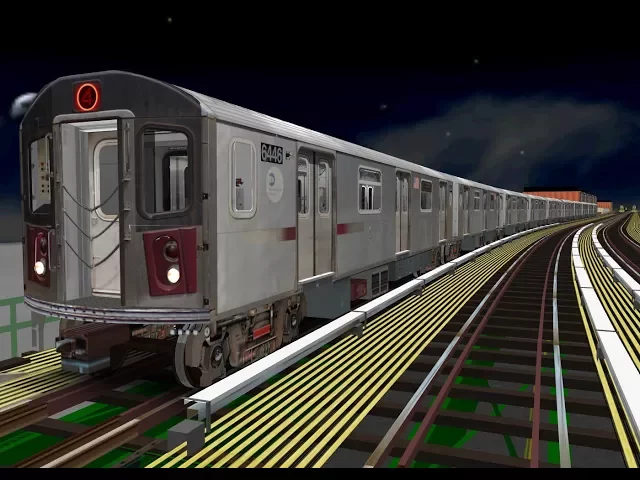
openBVE has been developed since the late 2000s and supports routes and cabs created for the Japanese BVE Trainsim. Its simulation includes detailed braking, movement during acceleration and cornering, and positional 3D sound. The engine contains little content of its own, but the user library covers many metro systems, including New York's subway with its R68 cars and the London Underground. It is available from the project website for Windows, Linux and macOS. The attraction is the range of real lines that can be explored through contributions from other enthusiasts.]
Brno Transit
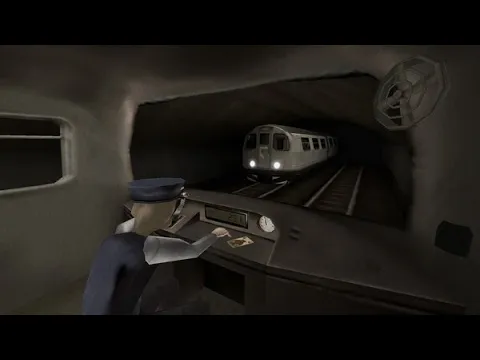
An ordinary metro shift gradually becomes a psychological horror story. Brno Transit, released in 2026, starts with the routine of driving a train through the underground of the Czech city: following the line, keeping time and operating the cab. Unease develops around those familiar tasks, with empty tunnels and a growing sense that something has changed. The tension relies on the atmosphere of the shift rather than post-apocalyptic gunfights. Pairing methodical train operation with psychological horror gives the repetition a narrative purpose: knowing what a normal journey looks like makes departures from it more noticeable.
Metrostroi Subway Simulator

Detailed electrical systems distinguish this community-developed addon for Garry's Mod. Metrostroi Subway Simulator has been in development since 2014, modelling the internal operation of its trains as well as their cab controls. Learning to drive therefore involves understanding the equipment and the procedures behind it. Multiplayer servers allow participants to run services together, an approach that helped establish a following across the CIS. The amount of technical detail calls for patience and some reading, particularly at the start. The addon itself is free, with the simulation aimed at players who want to examine the machinery behind a metro service.
Metro & transit planners
Designing a metro system means accounting for the passengers who use it. Some games here cover an entire city's network; others focus on a single station and the movement of people through corridors and escalators. Capacity, useful connections and clear navigation determine how well each layout performs.
Mini Metro
A simple network becomes harder to manage as new stations appear and passenger numbers grow. Mini Metro reduces the underground to coloured lines and geometric shapes on maps based on London, Paris, Tokyo and other real cities. Each passenger wants to reach a station of a particular shape, and every added stop changes how the existing routes need to connect. Carriages, tunnels and extra lines are limited, making the next upgrade a meaningful decision. Dinosaur Polo Club released the game in 2015, pairing its optimisation problems with a soundtrack generated by traffic on the network. One overloaded interchange can disrupt the wider system, so even a well-planned map needs regular revision. Daily challenges, an endless mode and a harder difficulty provide further variations. The clear presentation makes it easy to understand where a network is struggling, even when finding a solution takes considerably longer.
NIMBY Rails
Real geography is the basis for every line built here. NIMBY Rails, in Early Access from Weird and Wry since 2021, uses OpenStreetMap data to let players construct railways and metro systems in their own city or across entire countries. Timetabling and passenger simulation are central, with thousands of travellers responding to the usefulness of the routes and schedules. The scale supports detailed transport planning rather than a quick sequence of construction milestones. Its distinctive appeal is the chance to test ideas against familiar places, whether that means improving a local connection or developing a much larger network.
Cities in Motion
Metro lines need to fit into a wider public transport system. In Cities in Motion from Colossal Order, later the developer of Cities: Skylines, players manage services in Vienna, Helsinki, Berlin and Amsterdam over much of a century. The 2011 transport tycoon includes buses, trams, trolleybuses, water transport and the underground. A useful route attracts passengers and helps cover its costs; an unsuccessful one continues to incur maintenance expenses. As cities grow, land prices rise and new eras bring changing demand, the network needs to adapt. Planning the metro alongside other services makes it possible to see where each form of transport is most effective.
Overcrowd: A Commute 'Em Up
The layout of a single station can become a substantial management problem during rush hour. Overcrowd: A Commute 'Em Up from SquarePlay Games is set in the fictional Lubdon Town, whose underground draws on 1990s London. Released in 2020, it involves excavating new levels, building platforms and passages, placing turnstiles, kiosks and lifts, and hiring staff. The cutaway view makes congestion and staffing problems visible: cleaners may be unable to keep up, or passengers may struggle to find their way without clear signs. As the station expands, small layout decisions have wider consequences. The focus on individual spaces gives the broader problem of passenger flow a practical, readable form.
STATIONflow
Passengers must find their own way through the station, so the quality of the layout becomes visible in their behaviour. STATIONflow, released by Japan's DMM Games in 2020, asks players to build corridors, stairs and escalators, then place signs that guide thousands of people to the correct platforms and exits. There is no direct control over the crowd. Confusing navigation causes congestion and frustration, with consequences for the budget. Growing demand requires existing passages and connections to be reconsidered, while a workshop provides player-made maps. The game concentrates on the interchange itself, showing how much a busy station depends on clear routes and readable signs.
Train tycoon & railway management
Building a railway is the first step towards running a transport business. These management games combine supply chains, timetables, construction costs and competition. Sid Meier's Railroad Tycoon (1990) and Transport Tycoon Deluxe (1994) helped establish the approach, with later games developing its economic and logistical detail. Other branches of the genre are covered in the best strategy games for PC.
Railway Empire 2
Large maps of America and Europe provide room to develop a railway through the 19th and early 20th centuries. In Railway Empire 2, released by Gaming Minds and Kalypso in 2023, players connect growing cities, build stations and warehouses, and organise supply chains for local industries. Grain goes to breweries, cattle to stockyards and coal to steel mills, with deliveries contributing to urban growth. Research unlocks faster locomotives and improved signalling, while rival companies compete for profitable connections. Track layouts and station capacity need attention as traffic increases: one poorly placed junction can delay services across the network. The sequel expands the original's scale, makes track construction smoother and supports a larger volume of freight. Its main strength is the connection between individual construction decisions and the performance of the whole company.
Railway Empire
The growth of American railroads provides the setting for the 2018 original. In Railway Empire, new connections help determine which towns prosper, with terrain, rivers and the needs of local industries shaping each route. Players survey the landscape, build bridges and tunnels, and link settlements to useful sources of goods. Research improves the available locomotives, competitors pursue the same contracts, and staff with special traits offer further ways to improve an operation. Construction, connection and optimisation form the basis of the series. The sequel later developed these ideas on a larger scale, but the original retains the central appeal of turning a collection of routes into a viable business.
Transport Fever 2
Railways form part of a larger transport system alongside roads, shipping and aviation. Urban Games' Transport Fever 2, released in 2019, covers more than a century of development and includes hundreds of locomotives based on real railway history. Terrain tools allow routes to be shaped around hills and valleys, while the economy responds to the resulting connections. Factories require raw materials, and towns depend on the movement of goods and passengers to grow. Three campaigns cover different periods and regions; an open-ended sandbox allows a network to develop beyond fixed scenario objectives. Community modifications add trains, maps and mechanics, substantially extending the range of projects available. The attraction is the opportunity to see how a railway functions within a wider economy, with other modes of transport completing journeys that trains alone cannot serve.
Transport Fever
Transport networks develop from the horse-and-cart age into the diesel era in the first Transport Fever, released in 2016. Railways handle much of the movement between mines, mills and growing towns, but each delivery still depends on a route that takes cargo all the way to its destination. Planning connections and scheduling vehicles therefore have a direct effect on urban development. Two campaigns explore transport history across different continents, supported by terrain tools and a detailed simulation. The sequel later refined the approach, but the original already established the relationship between transport services, industrial demand and the growth of the places they connect.
OpenTTD
An open-source project has kept the principles of Transport Tycoon Deluxe in active development for more than two decades. OpenTTD began in 2004 and reached Steam in 2021, remaining free to download and extensively customisable. Road, rail, sea and air services can be combined into a profitable company, with competing firms operating on the same map. Signalling, cargo routing and network capacity become increasingly important as the business expands. Thousands of modifications add vehicles, industries, graphics and maps, allowing players to adjust both the appearance and the rules. Its longevity owes much to that flexibility: familiar transport problems can be revisited with different equipment and constraints.
Sid Meier's Railroads!
A comparatively accessible approach makes it easier to begin building and competing. Firaxis released Sid Meier's Railroads! in 2006, reducing some of the more involved bookkeeping while retaining the need to connect cities and transport valuable freight. Financial decisions add another dimension: the stock market allows competitors to be bought out, while auctions offer opportunities to secure industries and useful routes. Bright presentation and a brisk pace make early progress straightforward. The strategic interest develops as the company's own network becomes only one of several ways to gain an advantage over rivals.
Railroad Tycoon 2
Running a profitable railway requires an understanding of finance as well as track construction. PopTop's Railroad Tycoon 2, released in 1998, combines economic simulation and network building with a share market where stock dealings can matter as much as freight revenue. Dozens of scenarios cover different continents and periods, each with its own objectives and restrictions. The sandbox gives players more freedom to pursue their own approach, but cash flow remains a practical constraint on expansion. The relationship between transport operations and financial decisions is a major reason the game remains a useful reference point for railway tycoons.
Railroad Tycoon 3
Regional supply and demand help determine where a new line will be worthwhile. PopTop's Railroad Tycoon 3, released in 2003, moved the series into full 3D while developing its economic simulation. Prices respond to shortages and surpluses, making an underserved market an opportunity and unnecessary expansion a potential liability. Players can reshape terrain and revise routes as circumstances change. The three-dimensional landscape makes the engineering easier to inspect, but the market underneath it provides much of the strategic interest. A route needs to remain commercially useful as well as physically possible.
Chris Sawyer's Locomotion
The creator of Transport Tycoon returned to transport management with a spiritual successor in 2004. Chris Sawyer's Locomotion retains an isometric view and the emphasis on route planning, asking players to move passengers and freight across road, rail and water networks. Services support the growth of towns while generating income for further expansion. Busy junctions require careful signalling and traffic management, and improving an established network can be as important as adding a new route. Its familiar presentation will appeal to players of earlier tycoons, while the practical demands of a growing system provide reasons to keep refining it.
Mashinky
Different resources serve as currencies for expansion, giving the economy an unusual set of constraints. Mashinky, developed largely by Czech creator Jan Zeleny, has been in Early Access since 2018. Track construction takes place on a hexagonal grid, combining spatial planning with the token-based resource system. Players connect industries, expand timetables and reinvest the proceeds in a larger railway. The presentation brings retro influences into a modern 3D setting. The distinctive economy provides the clearest reason to try it: familiar transport decisions need to be considered in terms of several resources rather than a single cash balance.
Railway building & puzzle games
Track layouts make effective puzzles because each connection affects what can move through the network. Some games here use small grids and a limited number of pieces; others add timetables, construction budgets or live dispatching. The common task is to find a route that satisfies several constraints at once, whether that means arranging a handful of carriages or coordinating an entire production chain.
Train Valley 2
New orders require the railway to expand while trains are already using it. In Train Valley 2, factories need raw materials, finished goods need destinations, and additional contracts place more traffic on a network still under construction. Flazm's 2019 sequel builds its campaign around linked production tasks: delivering ore to a plant, moving the output and coordinating several trains without collisions. Levels gradually add more junctions and dependencies, making it important to consider how a new line affects existing services. A built-in editor and Steam Workshop support provide further stages after the campaign. The challenge comes from combining construction and traffic control without losing track of either.
Train Valley
A small set of actions is enough to create increasingly involved routing problems. In Flazm's Train Valley, released in 2015, players lay track between stations, change points and guide each train to its destination without collisions. The maps cover different historical periods, from early steam to modern railways, with unexpected disasters adding pressure. Compared with the sequel, the scope is smaller and the presentation less refined. The underlying problem remains effective: decide where a train should go, establish when it can cross another route and make sure the line is clear when it arrives.
Railbound
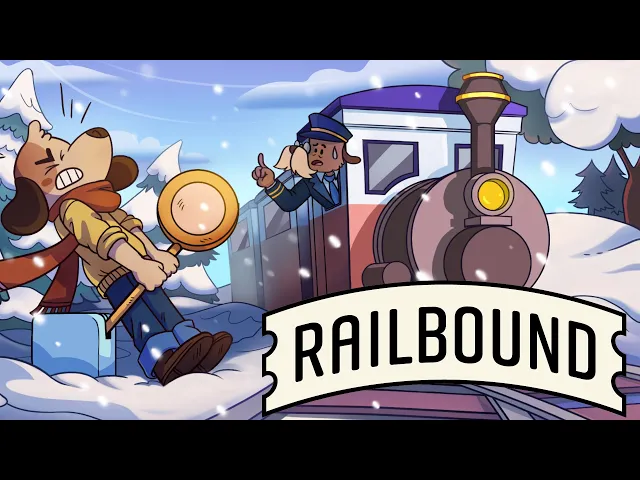
Pastel scenery gives these routing puzzles a gentle appearance, but arranging the carriages requires careful thought. Railbound asks players to place track tiles so that wagons join the engine in the correct sequence. New tools introduce semaphores that stop movement, tunnels that redirect cars and junctions that divide the route. Afterburn's 2022 game develops those ideas across hundreds of hand-crafted stages. A single misplaced tile can disrupt the sequence, so the solution depends on understanding the order of events as well as the shape of the track. The contrast between the relaxed presentation and the more demanding later puzzles is part of its appeal.
Cosmic Express
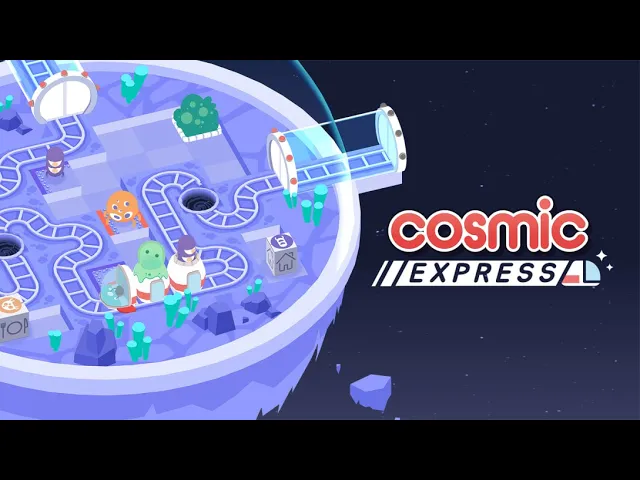
Limited seating makes a short journey through an alien colony surprisingly difficult to plan. Cosmic Express places passengers of different colours around a small grid and asks for a route that collects each one and delivers them to the correct destination. The number of seats restricts which passenger can be picked up next, so a seemingly convenient turn may prevent a later delivery. Released in 2017 by a small team of experienced puzzle designers, it builds substantial challenges from compact layouts. The small scale makes each decision easy to inspect, even when the right sequence is far from obvious.
Station to Station
Each new railway connection brings colour back to a grey landscape. Station to Station from Galaxy Grove (2023) is a voxel builder about linking towns, farms and workshops so goods can move between them. There are no failure timers or train crashes, leaving space to consider the layout and watch the world develop. Objectives still call for efficient routes within a budget, so the relaxed pace does not remove the planning entirely. The focus is on completing useful connections and improving their arrangement. It is a quieter interpretation of railway construction, suited to players who enjoy the design process without constant traffic emergencies.
Rail Route
A dispatcher's view turns each junction into a decision about timing and capacity. Rail Route asks players to set paths, hold services and guide trains through shared sections without causing a deadlock. Bitrich.info developed the game in Early Access before its 1.0 release in 2024, adding automation tools that allow whole parts of the network to follow programmed rules. The sandbox supports ongoing expansion, while rush-hour mode tests the same systems under a higher volume of arrivals. Delays can spread if a decision comes too late. Much of the satisfaction lies in moving from direct control of a few trains to supervising an automated system that handles a busy network reliably.
Railgrade
Rail links determine whether an industrial production chain can keep running. In Railgrade, mines, processors and assembly lines need a steady flow of materials, with growing demand placing more pressure on the network. Minakata Dynamics' 2022 management game treats this as an optimisation problem: track costs money, difficult gradients reduce capacity, and each locomotive needs a useful role. Terrain can be reshaped and routes rebuilt to improve the movement of goods. The industrial focus gives each level a specific engineering objective, with success depending on how well construction, production and transport fit together.
Train survival & horror games
A train can be a refuge, a base to maintain or a confined space that becomes difficult to escape. These games use railway journeys for survival stories and horror, from managing supplies aboard an armoured train to watching for anomalies in a seemingly ordinary carriage. For more beyond the railway setting, see the best horror games.
Last Train Home
An armoured train serves as barracks, workshop and hospital for the Czechoslovak Legion on its journey across Siberia. Ashborne Games' Last Train Home, released in 2023, combines real-time tactics with a pausable management layer. Between battles, soldiers need jobs and rest, the engine needs repairs, and food and medicine must be rationed. Combat rewards positioning and cover, with the option to pause and reconsider orders. Losses persist, so a wounded or missing soldier also affects the work that can be done aboard the train. That connection gives tactical decisions consequences beyond a single skirmish. The project was praised as one of the stronger Czech releases of its year, particularly for making the condition of the train inseparable from the survival of its passengers.
The Final Station
A train carries survivors through a world damaged by infection, with each station offering supplies and new risks. The Final Station from Do My Best (2016) alternates between side-scrolling exploration and caring for the people aboard. On foot, players search for ammunition, useful materials and clues while dealing with infected enemies. Bullets are limited, making careless shooting costly. Back on the train, passengers need food and medical supplies to survive the journey; delivering them alive provides resources needed for later stops. The competing demands create a practical reason to care about every search and every missed item. Its restrained pixel presentation leaves room for the growing sense of a world in decline.
Choo-Choo Charles
An island railway is patrolled by a monster with a locomotive's body and a spider's legs. In Choo-Choo Charles, the player's defence is a small armed rail vehicle that needs substantial improvement before a confrontation with Charles. Two Star Games' 2022 horror game became widely known through the absurdity of that premise. Progress involves following the tracks, completing tasks for island residents and collecting scrap to improve weapons, armour and the vehicle itself. Each upgrade prepares for the point when it becomes possible to pursue the monster rather than retreat. Charles can interrupt exploration, giving even a routine trip an element of uncertainty. The tone is deliberately exaggerated: much of the enjoyment comes from the unusual threat and the effort to prepare for it, rather than from sustained psychological horror.
Voidtrain
A train becomes a shared construction project as it travels through a space between dimensions. In Voidtrain from nearga, which reached version 1.0 in 2025, players collect materials, expand and arm carriages, cook and research new technology. The Void contains floating islands, unusual machinery and creatures that can threaten the journey. Up to four people can share one train, dividing the work between operation, combat and bringing supplies aboard. The Voidtrain Witch Islands puzzle guide covers some of the more involved riddles. Its surreal setting gives familiar survival and crafting tasks a different context, while the growing train makes the results of those tasks visible to the whole group.
Zompiercer
An armoured train provides a base that can be expanded as the journey continues through a zombie apocalypse. Zompiercer, the solo project of Russian developer DDDimanN, has been in Early Access since 2020. Players search stations for parts and fuel, add armour and weapons, and manage the resources needed to reach the next stop. The name recalls the frozen-apocalypse film, and the emphasis is similarly placed on a moving refuge in a hostile world. Some elements remain unfinished, but the central objective is clear: maintain and strengthen the train so it can carry its occupant farther into the ruined landscape.
Shinkansen 0
Repeated journeys through a spotless bullet train make small changes increasingly unsettling. Shinkansen 0, released in 2024, uses a spot-the-difference structure in which progress depends on noticing anomalies in a familiar carriage. A reflection may behave unexpectedly, a passenger may appear or a door may open differently. Responding correctly advances the journey; overlooking a change resets the cycle. The short format concentrates attention on an ordinary environment, using repetition and uncertainty to create tension. The setting becomes disturbing because it is familiar enough for each irregularity to stand out.
The Metro universe: metro as a setting
In the Metro series, underground stations have become settlements and the tunnels are dangerous routes between them. Survivors of a nuclear war face mutants, limited resources and conflicts with one another. Based on Dmitry Glukhovsky's novels, these shooters develop the metro into a world with its own communities and rules. The trilogy appears below in story order.
Metro 2033 Redux
A journey from the station of VDNKh introduces the dangers and communities of the Moscow underground. Metro 2033 Redux is the remastered version of 4A Games' 2010 adaptation of Dmitry Glukhovsky's novel. After nuclear war, survivors have settled in metro stations, and young Artyom leaves home to warn them about a new threat. Ammunition is scarce, gas-mask filters have a limited life, and the tunnels contain mutants and less easily explained dangers. Redux moves the original to the later Last Light engine and offers modes with different balances of action and survival. The contrast between inhabited stations and the uncertain passages outside them gives the setting much of its atmosphere. Its lasting strengths are discussed in this look back at 15 years of Metro 2033.
Metro: Last Light Redux
Competing factions pursue the abandoned D6 bunker and its arsenal as Artyom's story continues. Metro: Last Light Redux updates 4A Games' 2013 sequel, picking up shortly after the events of the first game. The fate of the Dark Ones remains tied to the protagonist's choices, while combat, stealth and resource management shape the route through the tunnels. Redux improves the visuals and includes Spartan and Survival modes, allowing a more action-focused or more demanding approach to supplies. The sequel develops the established formula while maintaining the close attention to life underground. It follows naturally from Metro 2033, both mechanically and as the next part of the story. For a closer assessment, see this Metro: Last Light review.
Metro Exodus
The Aurora becomes a home for a small group of survivors leaving Moscow's underground. In Metro Exodus, 4A Games' 2019 shooter, the armoured train connects a journey through post-apocalyptic Russia and provides a place to return between missions. Scavenged components are used for ammunition, gas-mask filters and equipment maintenance, making exploration important to survival. Seasons and semi-open regions bring different threats, factions and mutated wildlife, while moral decisions affect the outcome for the group. Workbenches and shelters are covered in this Metro Exodus guide. Time aboard the train gives the journey a more personal dimension: conversations with the crew and familiar spaces between expeditions help establish what is at stake. The railway is central to that structure, linking the separate locations and giving the companions a shared place to live.
Co-op & multiplayer train games
Working together changes the demands of building and operating a railway. Some games require quick decisions as the track runs out; others leave time to construct layouts or maintain a shared line. The selection includes local and online multiplayer, with different responsibilities to divide between participants. Further options for a group are covered in the best co-op games.
Unrailed!
The locomotive keeps moving whether or not the track ahead is ready. In Indoor Astronaut's Unrailed!, released in 2020, two to four players must gather wood and ore, make rails and lay them before the train reaches the end of the line. Tasks quickly overlap: one person carries materials, another crafts track, and someone else clears obstacles or brings water to an overheating engine. Procedurally generated desert, snow and swamp biomes change the conditions from one run to the next, with higher difficulty adding further pressure. Local and online play make it possible to coordinate on the same screen or remotely. Mistakes are a visible consequence of how the group divides its work, which gives successful cooperation a clear payoff. A calmer sandbox mode allows route planning without the same time pressure.
Unrailed 2: Back on Track
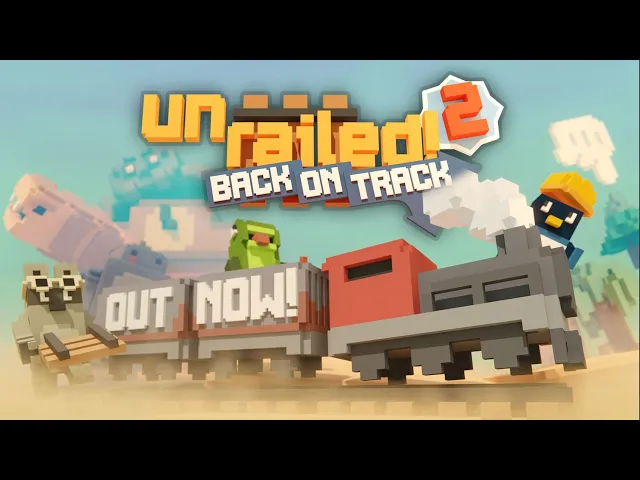
Additional construction options give returning teams more ways to approach the same urgent problem. Unrailed 2: Back on Track, released in 2026, retains the task of keeping a moving train supplied with fresh track while expanding the building mechanics, biomes and modes. Two to four players divide gathering, construction and repairs, adapting their plans to the terrain. New tools and gadgets create more options, but they also require coordination over who is doing what. For groups familiar with the original, the appeal is the opportunity to apply those shared skills to a wider range of situations.
Rolling Line
A tabletop railway offers room to build at a more deliberate pace. Rolling Line from Gaugepunk Games (2018) is a miniature-train sandbox with track, signals and scenery that can be arranged into detailed layouts. Small locomotives then travel through the completed model. VR support allows close inspection and hands-on placement, while sharing tools let players exchange creations or work on a layout together. The emphasis is on the construction process and the finished model, making it a quieter option for those who enjoy adjusting the details of a railway.
Railroads Online
Manual operation gives this cooperative narrow-gauge railway its character. Railroads Online, which reached version 1.0 in 2024, is set on a 19th-century line where players haul freight, change points and couple cars by hand. Physical locomotive controls require attention in the cab, while cargo handling and track work provide responsibilities elsewhere. A group can divide those tasks, with one player driving as others organise the next delivery or extend the route. Progress comes through the practical work of establishing a railway, making each new connection a visible result of cooperation.
Mystery & story games set on a train
A train's confined spaces are well suited to mysteries: suspects remain close by, conversations can reveal clues, and a journey limits the time available to investigate. Other games use the same setting for more personal or surreal stories. These adventures place observation, dialogue and the characters' decisions ahead of fast-paced action.
The Last Express

The Orient Express is travelling from Paris to Constantinople in July 1914, shortly before war breaks out in Europe. American doctor Robert Cath boards under a friend's name and discovers that the friend is already dead. Jordan Mechner, creator of Prince of Persia, built The Last Express around events that continue in real time: passengers move, talk and make plans independently, so being in the right carriage at the right moment determines what Cath learns. Players search belongings, listen to conversations and form uncertain alliances while trying to avoid suspicion. Smoking Car Productions used rotoscoped animation traced from live performances, giving the characters a distinctive painted appearance. The investigation develops into a conspiracy involving stolen gold and European politics. A commercial disappointment in 1997, the game later gained a following and several rereleases. Its lasting distinction is the sense that the people aboard have lives and intentions beyond the player's immediate investigation.
Agatha Christie — Murder on the Orient Express
A snowbound train and a murder behind a locked door provide the starting point for the investigation. Microids' Murder on the Orient Express (2023) adapts Agatha Christie's 1934 novel, placing players in the role of the Belgian detective. Progress involves searching compartments, questioning suspects and arranging deductions on a board to compare clues and accounts. Contradictions in the passengers' alibis are as important as physical evidence. A newly written character adds changes to the familiar story, giving readers of the novel some developments they will not already know. The measured pace keeps the emphasis on observation and dialogue rather than reflexes.
Beholder: Conductor
A conductor's responsibilities extend from checking tickets to reporting on the people in the carriages. In Beholder: Conductor, a 2025 spin-off from Alawar, a totalitarian state expects the protagonist to overhear conversations, search luggage and pass passengers' secrets to the authorities. Choosing to report someone can gain favour, while protecting them creates a different kind of risk. A full Beholder: Conductor walkthrough explains the branching decisions. The setting changes from the main series' apartment block to a moving train, but the underlying moral pressure remains familiar. Routine duties repeatedly create opportunities to interfere in other people's lives, and the reports determine what happens to them.
Blackwood Crossing
A teenage girl's search for her younger brother turns an ordinary train journey into a series of dreamlike scenes. Blackwood Crossing from PaperSeven (2017) explores the changing relationship between two orphaned siblings through carriages, memories and spaces that no longer follow everyday logic. The puzzles are gentle and largely depend on observation. They support a short story about grief, guilt and the experience of growing apart. The train provides a starting point for that exploration, while the shifting surroundings gradually reveal more about what the siblings are struggling to express.
Syberia
A clockwork train takes Kate Walker far beyond the business trip she expected. In Syberia, released by Benoît Sokal and Microids in 2002 and remastered in 2025, the American lawyer arrives in the Alpine town of Valadilene to arrange the sale of an automaton factory. The search for a missing heir instead sends her across Europe, through Barrockstadt and Komkolzgrad towards the legendary land of Syberia and its surviving mammoths. Mechanical inventions and unusual towns establish a melancholy, fairy-tale atmosphere. The unhurried point-and-click structure leaves room for Kate's gradual reconsideration of the life she was following. The remaster brought that journey to another generation of players. For help with the updated edition, see this Syberia Remastered guide.
Train games FAQ
What are the best train games on PC?
The choice depends on the genre. Train Sim World 5 and SimRail focus on driving; Railway Empire 2 and Transport Fever 2 cover railway management. Mini Metro and Train Valley offer planning puzzles, while Choo-Choo Charles and Metro Exodus bring horror and survival elements to the setting. The list above groups the wider selection by genre.
What is the most realistic train simulator?
Different simulators emphasise different parts of railway operation. Train Sim World 5 combines licensed locomotives with real routes, SimRail connects driving to online dispatching, and Derail Valley places particular emphasis on physics and hands-on controls, especially in VR.
What subway or metro simulators can I play?
Options include SubwaySim 2 with the Hamburg and Berlin networks, Hmmsim Metro, Prague's Back in Service, and the free projects Metrostroi Subway Simulator and openBVE. For planning lines and stations, consider Mini Metro, Cities in Motion and Overcrowd.
Are metro games only simulators?
No. The Metro series — 2033 Redux, Last Light Redux and Exodus — combines shooting, stealth and survival in a post-nuclear world based on Dmitry Glukhovsky's novels. It has a separate section in this list.
What are the best train tycoon and railway management games?
Railway Empire 2, Transport Fever 2, the free OpenTTD and the classic Railroad Tycoon 2 all involve building routes and managing a transport company. They are covered in the railway management section above.
Are there train horror or survival games?
Yes. Choo-Choo Charles centres on a spider-like locomotive, The Final Station follows a journey through an infected world, and Shinkansen 0 uses anomalies aboard a bullet train. Metro Exodus also combines survival and horror elements with the crew's journey on the Aurora.
Are there story or mystery games set on a train?
The Last Express and Agatha Christie — Murder on the Orient Express focus on investigations aboard a train. Beholder: Conductor, Blackwood Crossing and Syberia use railway journeys for stories about surveillance, grief and personal change.
Share the train and metro games you return to in the comments, whether they are simulators, management games or horror adventures. Add any favourites missing from the list.
Twój pociąg staje pośrodku niczego. Co robisz?
What else to play
Railways also have an important role in games about automation, industry and city-building. Here, trains form part of a larger production or transport system, giving route planning a different context. For more games about developing a city around those connections, see the best city-building simulators.
Factorio
An automated factory eventually grows beyond the distances that conveyor belts can comfortably serve. In Factorio, freight trains carry ore and products between remote outposts, making rail an important part of later development. Signals and junctions become engineering problems in their own right, with the reliability of the network affecting the production lines it supplies.
Cities: Skylines
Metro lines, commuter trains and freight facilities contribute to the development of an entire city. In Cities: Skylines, rail transport takes pressure off roads, connects districts and supports the movement of goods. For players interested in trains, it offers a way to place a railway within a wider urban network and see how the layout affects passenger demand.
Voxel Tycoon
Railways connect factories, resources and towns on an open-ended industrial map. In Voxel Tycoon, players build transport networks, move materials between industries and use the proceeds to expand the business. Voxel graphics give the landscape a model-like appearance. The project remains in Early Access, with the main transport and production systems already available to explore.
Najlepsze gry z pojazdami: samochody, samoloty, czołgi, pociągi
- Najlepsze gry wyścigowe na komputery i laptopy o niskiej wydajności w 2026 roku
- Najlepsze gry wyścigowe
- 92 Najlepszych Gier Samolotowych — Symulatory Lotów i Gry Lotnicze na PC i Mobile
- Najlepsze gry o farmie: najlepsze symulatory farmy na PC, konsole i urządzenia mobilne
- 44 najlepsze gry o II wojnie światowej w 2026 roku: strzelanki, strategie i symulatory na PC
- 58 Best Train and Metro Games on PC: Train Simulators, Tycoons and Horror Games